
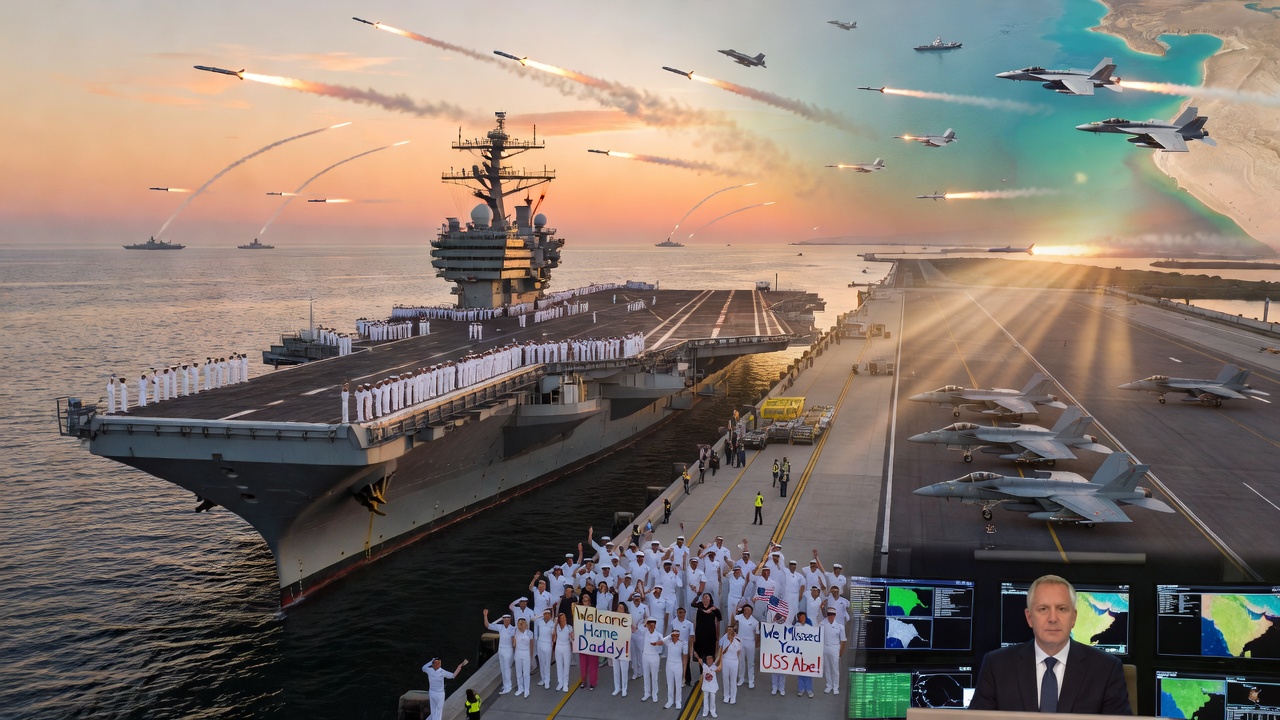
The USS Abraham Lincoln has docked in San Diego after nearly ten months at sea, closing out one of the longest and most intense deployments of a U.S. aircraft carrier in recent memory. The strike group went more than 260 consecutive days without a single port call, a stretch the Pentagon says coincided with sustained military operations against Iran. The return marks relief for thousands of sailors and their families, but it also raises hard questions about the human and operational cost of extended combat deployments.
A Deployment Defined by Intensity, Not Just Duration
Defense Secretary Pete Hegseth described the scope of the carrier's work in stark terms: thousands of combat sorties flown and hundreds of Tomahawk missile launches conducted over the course of the deployment. Those figures reflect a tempo rarely sustained for this long. Carrier strike groups are typically rotated to allow crews rest, resupply, and maintenance. A deployment stretching close to ten months, with no break in port calls for the better part of nine of those, represents a significant departure from the Navy's usual operational rhythm.
That rhythm exists for a reason. Extended time at sea compounds fatigue, strains equipment, and limits the ability of commanders to rotate personnel through rest cycles. When military planners stretch deployments to meet strategic demands, they are making a trade-off between immediate operational need and the long-term wellbeing of the force.
The Human Toll Behind the Headlines
The Navy disclosed eight suicide attempts among sailors in the Abraham Lincoln strike group during the deployment. That figure, reported alongside the operational details, underscores a reality the military has struggled to address for years: prolonged isolation, continuous combat readiness, and separation from family networks place serious strain on mental health.
Shipboard life offers little privacy and few outlets for decompression, especially during wartime tempo. Mental health resources exist within carrier strike groups, but access and stigma remain persistent challenges in a culture that prizes resilience and mission focus. The disclosure of these incidents, rather than being buried, suggests growing institutional willingness to acknowledge the psychological costs of extended deployments, even as the Navy continues to rely on carriers as its primary tool of forward power projection.
Strategic Stakes Beyond the Flight Deck
The Abraham Lincoln's mission did not occur in isolation. It was part of the broader U.S. response to tensions with Iran, a conflict with direct consequences for regional security and global energy markets. Carrier presence in or near the Persian Gulf has long served as both a deterrent and a rapid-response platform, and sustained deployments like this one signal how seriously Washington has treated the Iran standoff.
Energy markets watch these deployments closely. Disruptions to shipping lanes near the Strait of Hormuz, even hypothetical ones, can move oil prices, and a visible U.S. naval presence is often read by traders and allies alike as a barometer of regional stability. The carrier's return home does not necessarily signal a reduction in American commitment to the region; strike groups typically rotate, with another vessel or task force assuming presence duties.
What Comes Next for the Crew
For the sailors themselves, reintegration after nearly a year away brings its own set of challenges, from reconnecting with family routines to processing the psychological weight of sustained combat operations. Military support systems, including counseling and family readiness programs, are designed to ease that transition, though their effectiveness depends heavily on resourcing and follow-through once the initial homecoming attention fades.
The Abraham Lincoln's return offers a moment of relief, but it also leaves the Navy with unresolved questions about how long crews can sustain this pace of operations before the costs, measured in mental health, retention, and equipment wear, outweigh the strategic benefits.