
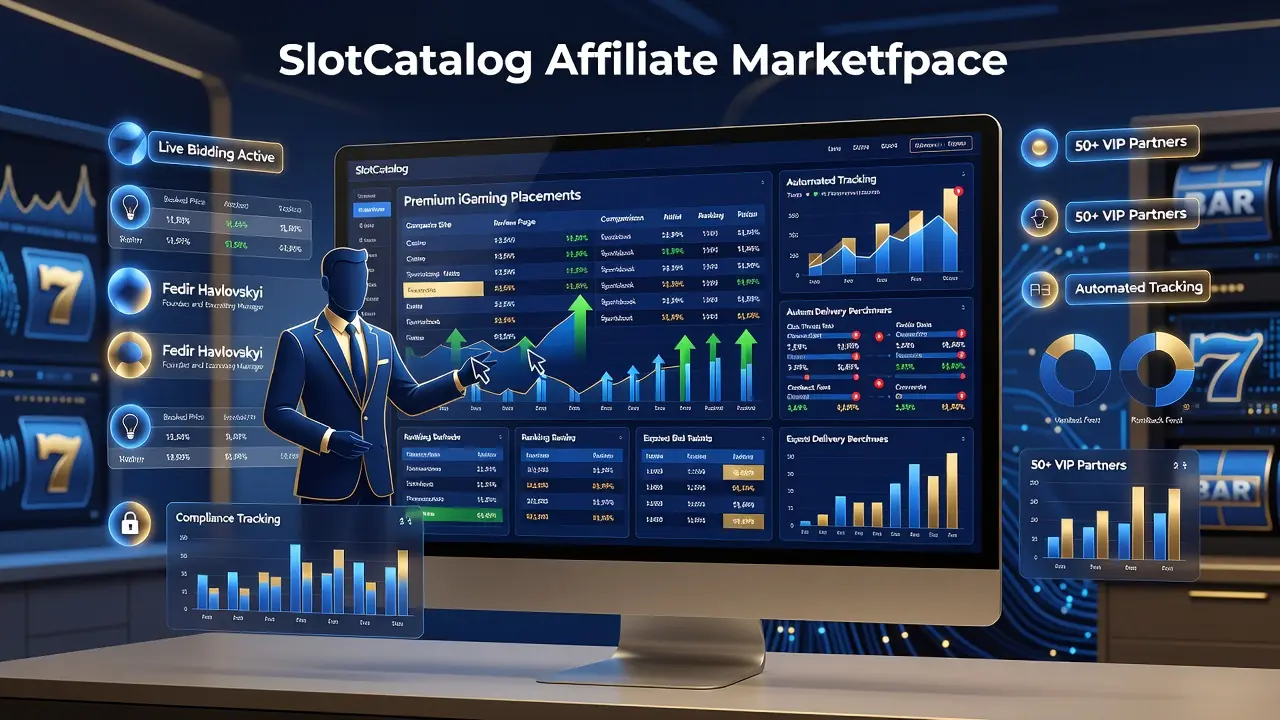
SlotCatalog, a platform used by iGaming affiliates to buy and manage advertising placements, has rebuilt its Affiliate Marketplace around real-time bidding and automated performance tracking. The update replaces a system built on fixed prices and manual negotiation with one where partners can see live pricing, compete for premium positions, and monitor delivery against a stated benchmark without going back and forth with an account manager.
Why fixed pricing was becoming a bottleneck
Affiliate marketing in online gambling runs on placement: where a casino or sportsbook link appears on a comparison site, a review page, or a ranking table directly affects how much traffic and how many conversions it generates. Historically, platforms like SlotCatalog sold these positions through negotiated deals, often fixed for a set period regardless of how demand shifted. That model works at small scale, but it strains as the partner base grows. Every price change or dispute over underperformance required a conversation, and popular slots were effectively allocated on a first-come basis rather than on what the market was actually willing to pay.
The new bidding mechanism lets partners challenge an existing booking by offering a higher price for the same slot, with the current holder notified immediately if they are outbid. Pricing becomes dynamic, moving with demand rather than sitting fixed for the duration of a contract. That mirrors how programmatic ad exchanges and other digital marketplaces already operate, bringing affiliate placement buying closer to standard practice elsewhere in online advertising.
Automated tracking closes the reporting gap
The second change addresses a longstanding friction point in affiliate marketing: knowing whether a placement is actually delivering. Each position on the Marketplace now carries an expected delivery benchmark, calculated from projected exposure and click volume based on real traffic and market data. Actual performance is then measured against that benchmark using click and conversion data pulled through partners' postback feeds.
When a placement underperforms, the system flags it automatically rather than waiting for a partner to raise the issue after a campaign has run its course. SlotCatalog's affiliate management team is then expected to rebalance exposure or adjust delivery while the campaign is still active. For operators and affiliates alike, that shifts the relationship from after-the-fact reporting to something closer to continuous monitoring, reducing the lag between a problem appearing and someone acting on it.
What it signals for the wider affiliate market
Fedir Havlovskyi, founder and executive manager at SlotCatalog, framed the change as a response to scale: as the partner network expanded, individual negotiation for every placement became impractical. According to the company, more than 50 VIP partners are already using the upgraded system to book positions and manage performance without the manual coordination the old model required.
SlotCatalog says the next phase is opening the Marketplace to independent third-party webmasters, turning what has so far been an internal tool into shared infrastructure for the broader affiliate ecosystem. That move would place SlotCatalog alongside a wider trend in iGaming marketing: platforms moving away from manually brokered deals toward structured, data-driven marketplaces, a pattern already visible in programmatic display advertising and influencer marketing platforms outside gambling.
Transparency as a compliance asset
For an industry under steady regulatory attention around advertising practices, tools that make placement pricing and performance visible and auditable carry value beyond simple efficiency. Clearer records of what was booked, at what price, and how it performed can support better internal compliance reviews and make it easier for operators to demonstrate that marketing spend is tied to verifiable delivery rather than informal arrangements. That does not change the underlying nature of affiliate marketing as a customer-acquisition channel for gambling products, but it does make the mechanics of that channel more traceable, which regulators and operators alike are increasingly expected to show.