
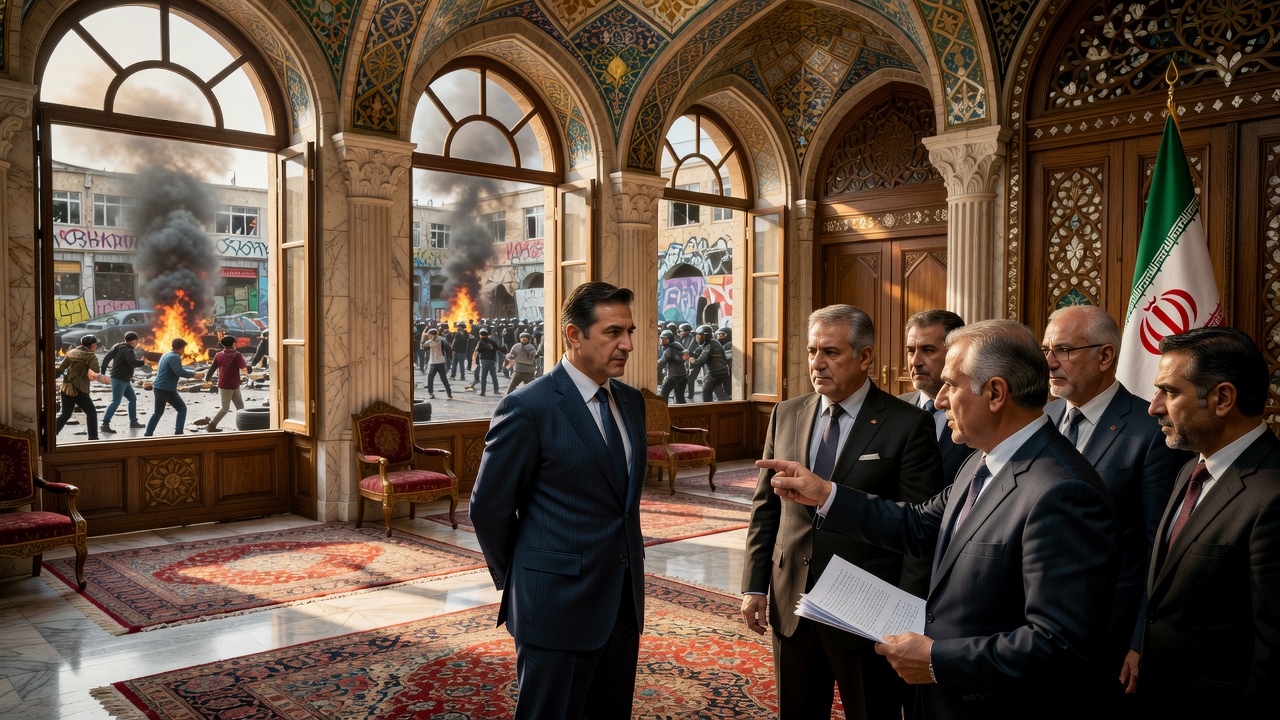
Iran has summoned France's ambassador in Tehran, lodging a formal protest over what it calls the violent treatment of students during a wave of nationwide school demonstrations. Iranian officials accuse French security forces of excessive force and human-rights violations, and have demanded that Paris open an investigation into police conduct. French authorities, for their part, describe a more complicated picture: protests that have included serious violence, mass arrests, and attacks on schools, staff and security personnel.
A Diplomatic Clash Over Competing Narratives
Summoning an ambassador is one of the more visible tools in diplomatic signaling. It falls short of expelling an envoy or severing relations, but it puts a government's objections on the formal record and forces a public response from the country being criticized. In this case, Tehran's move reflects an attempt to position itself as a defender of student rights abroad, even as it faces persistent criticism over its own record on protest policing and civil liberties at home. That juxtaposition is not lost on observers of Iranian foreign policy, which has frequently used human-rights language selectively, invoking it when convenient against Western governments while resisting similar scrutiny domestically.
France's position, as described by its own authorities, complicates the narrative further. Officials there point to violence directed at schools, staff and police during the unrest, along with a significant number of arrests. This is a familiar pattern in disputes over protest policing worldwide: one side emphasizes the force used against demonstrators, the other emphasizes the disorder or violence that prompted intervention. Both framings can be partially true at once, and untangling them usually requires independent verification rather than competing government statements.
Why Protest Policing Draws International Attention
Disputes like this one matter beyond the immediate diplomatic exchange because they touch on principles that extend well past any single protest movement: the right to peaceful assembly, the proportionality of police response, and the accountability mechanisms available when force is used against minors or students. When a government calls for an investigation into another state's policing, it is implicitly asserting a standard it expects to be applied universally. Whether that standard is applied consistently, including to the summoning government's own conduct, is often where such diplomatic gestures invite scrutiny.
It is also worth situating this within a broader pattern of states using diplomatic channels to comment on internal unrest elsewhere. Such interventions can be read as genuine human-rights advocacy, as geopolitical positioning, or as a mixture of both. France has, at various points, voiced concern over Iran's own handling of domestic protests, which adds a layer of mutual scrutiny to the current exchange.
What Happens Next
A formal summons rarely resolves a dispute on its own. The practical outcomes to watch include:
- Whether French authorities respond publicly to Tehran's specific allegations or simply reiterate their account of the unrest
- Whether independent bodies, rather than the two governments involved, offer any assessment of the protests and the policing response
- Whether the exchange affects the broader, already strained diplomatic relationship between Paris and Tehran
- Whether domestic political pressures in either country shape how far each government pushes the issue
For now, the episode stands as a pointed example of how domestic unrest can quickly become a matter of interstate dispute, with each government selecting the facts that support its position. Readers following the story should treat initial statements from either side as claims to be tested against independent reporting, not as settled accounts of what occurred in French schools and streets.