
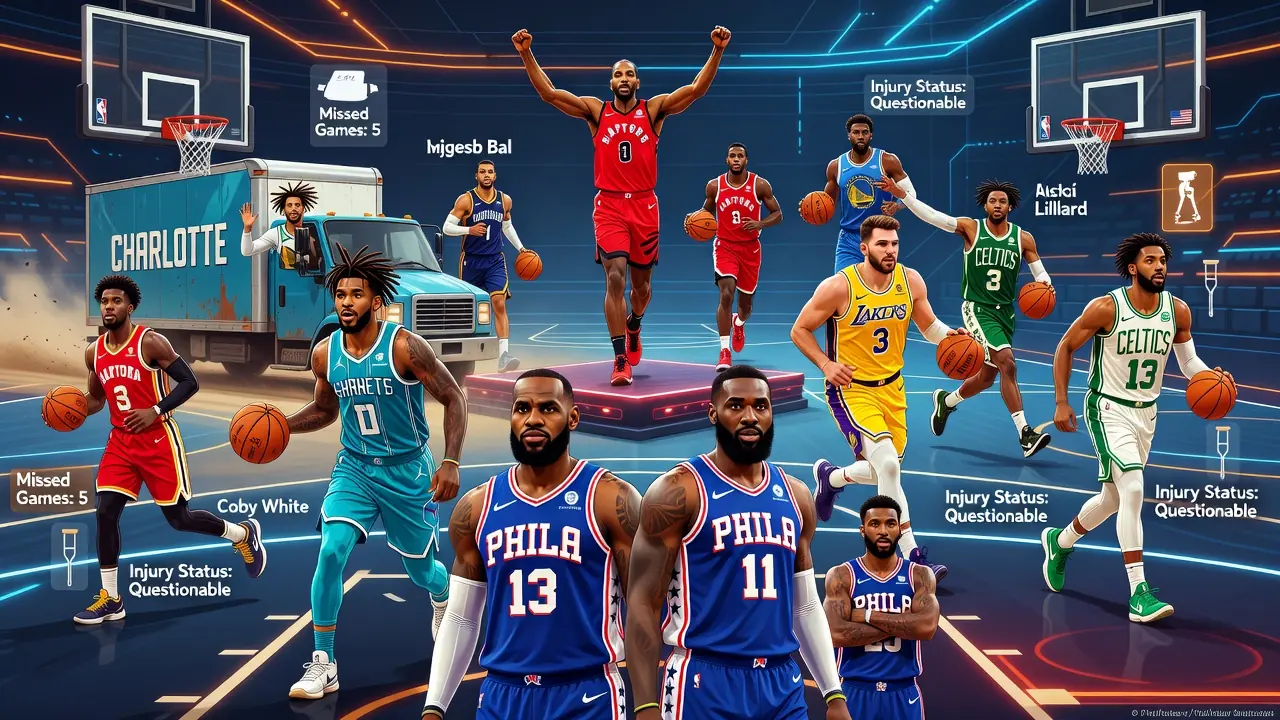
A single summer of roster moves can rewrite the fantasy basketball value chart at guard, the position with the deepest talent pool in the sport. LeBron James and Jaylen Brown have relocated to Philadelphia, LaMelo Ball has left Charlotte, and Kawhi Leonard is back in Toronto. Each move redistributes shot attempts, touches, and minutes among teammates who stayed put, which means last year's draft rankings are already outdated heading into 2026-27.
Usage Is the Real Currency
Team success matters less to fantasy production than a player's share of the offense. Possessions are finite, and when a ball-dominant scorer departs, someone on the roster inherits his touches. Luka Dončić becomes the unquestioned engine of the Lakers' attack with James gone, and that shift cascades down the depth chart to open space for Austin Reaves. Charlotte's backcourt now flows through Coby White rather than Ball, and Boston's offense leans more heavily on Derrick White with Brown traded away. The inverse holds in Philadelphia, where adding two high-usage scorers compresses the opportunity for returning players like VJ Edgecombe. Before valuing any guard, the more useful question is who else on that roster still needs the basketball.
Injury History Deserves a Discount, Not a Guess
Daily injury reports shift constantly, and a player's status can change right up to tip-off, so lineup checks remain part of any week-to-week fantasy routine. Draft-day decisions, though, hinge on a different pattern: how often a player lands on that report across a full season. Age is one factor, visible in recent absences from Stephen Curry and Damian Lillard. Some players carry a long-standing injury history, as Ja Morant's career illustrates, while others, including Trae Young, built reputations for availability before recent setbacks complicated the picture. None of this predicts a specific injury, but it does argue against paying full draft price for players who reliably miss time. Guard depth makes this discount easier to apply, since replacement-level guards are far more available on waivers than replacement-level big men.
Where the League-Winners Hide
Elite guards are scarce enough that missing on the top tier shouldn't trigger panic. Usable production exists well past pick 100, and in category-based formats, that depth lets managers target specific statistical gaps rather than chasing name recognition. Some late-round guards contribute assists or steals in bulk; others, like Detroit's Ausar Thompson, add rebounding totals unusual for the position without damaging shooting percentages elsewhere. The players worth flagging this year include Ajay Mitchell in Oklahoma City, who benefits from the departures of Aaron Wiggins, Isaiah Joe, and Lu Dort; rookie Darius Acuff Jr. in Sacramento, who steps into a backcourt thinned by departures; and Immanuel Quickley in Toronto, whose role should be the least disrupted by Kawhi Leonard's return among Raptors guards.
Breakouts and the Limits of Projection
Cooper Flagg, Austin Reaves, and Derrick White represent the clearest breakout cases this cycle, each benefiting from a teammate's departure rather than a pure talent leap. That distinction matters: usage changes are observable and trackable, while health, coaching decisions, and in-season trades remain unpredictable. Fantasy drafting rewards those who separate confirmed opportunity from hope. No projection accounts for every variable, and treating any ranking as certain rather than probabilistic is the surest way to overvalue a roster spot.