
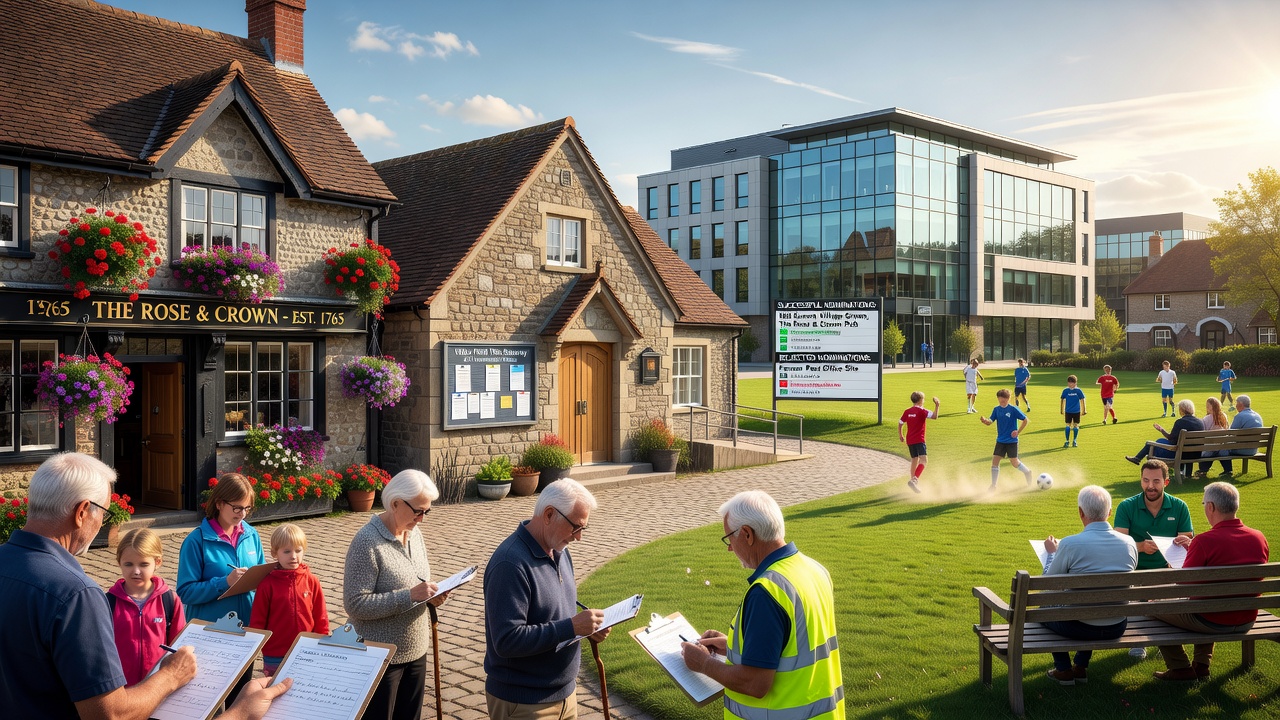
Communities in Mid Sussex have a formal route to protect buildings and land that matter to local life, through a scheme known as Assets of Community Value. The mechanism, created under the Localism Act 2011, gives residents the chance to flag a pub, shop, community hall or green space before it quietly changes hands, and to ensure a pause for reflection if it ever comes up for sale.
What qualifies as an Asset of Community Value
The test is deliberately broad but not unlimited. A site qualifies if its main use currently, or in the recent past, has served the social wellbeing or social interest of the local area, and there is a realistic chance it could do so again. This is not a mechanism for sentimental attachment alone; it requires a genuine community function, whether that is a meeting place, a sports facility, a shop serving as a hub for local life, or similar. Mid Sussex District Council maintains a public list of assets that have been successfully listed, alongside a record of nominations that were turned down, giving residents a sense of how the criteria are applied in practice.
How the nomination and bidding process works
Nominating a site involves completing a form and submitting it to the council's property team. If accepted, the asset is added to the official list, and should the owner later decide to sell, the community is given a window to prepare and submit a bid before the property is sold on the open market. This does not guarantee the community will secure the purchase, nor does it force the owner to sell to a community group, but it does interrupt a sale process that might otherwise happen without local knowledge or input. For many smaller groups, this breathing space is the difference between losing a valued building permanently and having a genuine chance to raise funds or organise a case for ownership.
The separate right to challenge council services
A related but distinct provision, the Community Right to Challenge, allows certain organisations, including voluntary and community bodies, charities, parish councils, and groups of at least two council employees, to express interest in running a council service themselves. Expressions of interest are accepted annually between 1 March and 30 April, with an additional window tied to the expiry of existing service contracts, opening 15 months and closing 12 months before a contract ends. The council has 30 days to acknowledge an expression of interest, and the overall process can take between six and 26 weeks to resolve. If a submission is rejected, the council is required to publish its reasoning within 10 working days, and successful applicants move into a competitive procurement stage where other organisations may also bid.
Why these rights matter for local decision-making
Both schemes reflect a broader shift in local governance: giving residents formal tools to influence what happens to shared spaces and services, rather than leaving those decisions solely to market forces or council administration. The practical value depends heavily on community capacity, organising a credible bid or service proposal takes time, funding, and coordination, which is why councils point residents toward guidance such as the My Community Rights website before they begin. For local authorities, the process also imposes clear procedural duties, timely responses, published reasoning, and transparent procurement, which brings a degree of accountability to decisions that might otherwise attract little public scrutiny.