
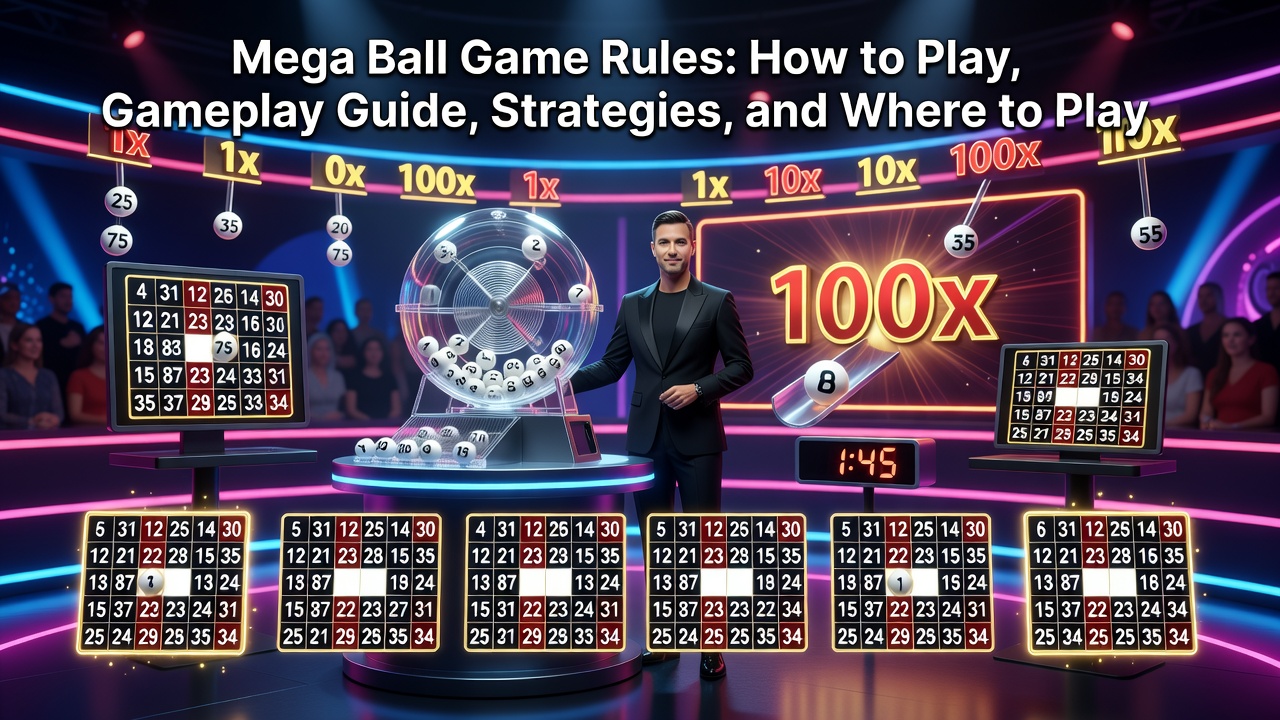
A single round lasts under two minutes, yet the payout multiplier can swing from 1x to 100x before the balls stop dropping. That volatility is the entire appeal. Mega Ball sits in an unusual spot between a bingo hall and a live casino studio, borrowing the number-matching mechanic most people learned as children and pairing it with a random multiplier system that rewards patience over skill. The result is a game that feels familiar within seconds but keeps experienced players engaged for far longer than nostalgia alone would explain.
What makes the format worth a closer look is how little friction stands between a new player and a full understanding of the mechanics. There's no hand ranking to memorize, no betting sequence to master, no dealer etiquette to worry about getting wrong. Anyone curious about how to play mega ball can grasp the core loop - buy cards, watch numbers drop, collect multipliers, wait for a match - within a few rounds. For readers who want to try the format directly while following along with this guide, how to play mega ball is available through a live studio interface that mirrors everything described below.
This guide walks through the mechanics in order: the formal mega ball game rules, a round-by-round breakdown of mega ball gameplay, the strategic decisions that actually matter, and a practical look at where to play mega ball without wasting time on platforms that don't run the game properly. By the end, the goal is that you understand not just the rules but the reasoning behind them.
What Is Mega Ball and Why It's Gaining Popularity
Mega Ball is a live-dealer number game that combines bingo-style card matching with a lottery-drawing format and a multiplier mechanic borrowed from slot design. A host operates a large ball machine live on camera, drawing numbered balls one at a time while players hold up to four cards, each containing a 5x5 grid of numbers. The last ball drawn in every round - the "mega ball" itself - carries a random multiplier that can range from a modest 1x up to a dramatic 100x, applied to any winning card at the moment it's revealed.
Origins and Format
The game emerged as part of a broader wave of live studio formats designed to modernize simple, established mechanics rather than invent new ones from scratch. Bingo has existed for generations; Mega Ball simply restructures it for a faster pace and adds a variable payout layer that traditional bingo never had.
How It Differs From Traditional Bingo
Traditional bingo requires a full house or specific pattern and often runs for many minutes across dozens of number calls. Mega Ball compresses this into a tighter window - typically around 20 balls drawn per round - and allows multiple simultaneous winning lines per card, which changes the math of how often a payout actually lands.
Why Players Are Drawn to It
- Rounds are short, so downtime between decisions is minimal
- The multiplier mechanic adds a slot-like anticipation absent from classic bingo
- Rules are simple enough to learn in one sitting
- Live hosting adds a social, broadcast feel that pure RNG games lack
Mega Ball Game Rules Explained
Understanding the mega ball game rules before sitting down to play removes almost all of the guesswork that otherwise slows down a first session. The rules are fixed and don't vary meaningfully between operators, which makes this section applicable no matter where you eventually play.
Card Structure and Numbering
Each card is a 5x5 grid containing 24 numbers plus one free space in the center, similar to a standard bingo card. Numbers on each card are randomly generated and unique to that card, meaning no two cards in a session share an identical layout.
Number of Balls Drawn Per Round
A fixed set of balls - commonly around 20 - gets drawn from a larger pool, usually numbered 1 through 75. As each ball is called, matching numbers get marked automatically on every card a player holds, removing manual tracking from the equation entirely.
Winning Line Conditions
A card wins when marked numbers form a complete horizontal, vertical, or diagonal line across the grid. Because cards allow multiple lines to complete within the same round, a single card can trigger more than one payout before the round ends.
The Mega Ball Multiplier Mechanic
The final ball drawn each round is the mega ball, and it always carries an attached multiplier value assigned randomly at that moment. If any winning line is completed using that specific numbered ball, every payout tied to it gets multiplied - sometimes modestly, occasionally dramatically.
Step-by-Step Mega Ball Gameplay Guide
Mega ball gameplay follows the same sequence every round, which is part of why the format feels approachable even to first-time players. Once you've watched one full round, you've effectively seen the entire structure.
Buying Cards Before the Round Starts
Before the ball drawing begins, players select how many cards to purchase - typically between one and four - with the total cost scaling per card. More cards mean more coverage across possible winning combinations, but also a higher stake per round.
The Ball Drawing Sequence
The host draws balls one at a time from the machine, calling each number aloud as it appears on screen. Matching numbers auto-mark on all held cards in real time, so there's no action required from the player during this phase beyond watching.
How Payouts Are Calculated
Once a line completes, the payout is calculated based on the base prize value for that line type, then adjusted by the mega ball multiplier if it applies. Multiple completed lines on the same card stack their payouts rather than replacing one another.
What Happens at Round End
The round closes once all balls have been drawn or every possible winning line has already completed, whichever happens first. Winnings settle automatically, and a new round begins within seconds, keeping the pace brisk compared to slower live-dealer formats like blackjack or roulette.
Mega Ball Strategies That Actually Work
Mega Ball is fundamentally a game of chance - no sequence of decisions changes the odds of which numbers get drawn. That said, mega ball strategies exist around bankroll management and card volume that meaningfully affect how a session plays out, even if they can't influence individual outcomes.
Card Volume vs. Risk Tolerance
Buying four cards instead of one increases the statistical chance that at least one card completes a line, since more grids are in play against the same draw. The tradeoff is straightforward: higher per-round cost against a higher frequency of small wins, rather than a guaranteed increase in total return.
Bankroll Management Across Sessions
Because rounds complete quickly, it's easy to play far more rounds per hour than in slower table games, which means bankroll depletes faster if stakes aren't set deliberately. Setting a fixed session budget before starting, and treating the mega ball multiplier as a bonus rather than an expectation, keeps sessions sustainable.
Understanding Multiplier Timing
The multiplier only matters if a winning line completes on the exact ball it's attached to - meaning its value is irrelevant on most rounds where no line closes at that specific moment. Recognizing this prevents the common mistake of overvaluing a high multiplier announcement before knowing whether it actually applies to a live win.
Realistic Expectations Over Time
No staking pattern changes the underlying probability of the draw. The most reliable approach treats each round as independent, avoids chasing losses by increasing card count after a cold streak, and views the multiplier swings as entertainment variance rather than a signal to adjust strategy.
Where to Play Mega Ball
Availability depends entirely on which live casino platforms carry the studio feed, since Mega Ball is produced by a specific game studio and licensed out to operators rather than built independently by each site.
What to Look for in a Platform
- A live dealer section that explicitly lists Mega Ball among its game shows
- Transparent payout tables displayed before a round starts
- Stable video streaming without noticeable lag during ball draws
- Clear licensing and regulation information for the region you're playing from
Desktop vs. Mobile Experience
The game translates well to mobile since the grid layout and auto-marking system require no manual input, but stream quality can vary more on mobile data connections than on a stable desktop line. Testing a session on Wi-Fi before committing to real-money mobile play avoids missing a ball call due to buffering.
Checking Licensing and Fair Play
Any legitimate platform hosting the game will display licensing details from a recognized gaming authority, along with information on how the ball draw and multiplier are audited for fairness. Skipping this check is the most common oversight new players make when choosing where to play mega ball.
Frequently Asked Questions
How many cards can I play at once in Mega Ball?
Most platforms allow between one and four cards per round. Each additional card increases the total stake for that round but also raises the chance that at least one grid completes a winning line.
Does the mega ball multiplier apply to every win in the round?
No. The multiplier only applies to winning lines that complete on the specific ball designated as the mega ball, which is always the final ball drawn. Lines completed earlier in the round pay at standard value.
Is Mega Ball based on skill or luck?
It's entirely luck-based. Numbers are drawn randomly, and no decision during the round - aside from how many cards you buy beforehand - affects which lines complete.
How long does a typical round take?
A full round, from card purchase to payout settlement, usually finishes in under two minutes, making it significantly faster than most traditional table games.
Can I play Mega Ball for free before betting real money?
Some platforms offer demo or practice modes that let you watch the mechanics without wagering. This is a practical way to learn the pace and multiplier timing before committing a bankroll.
What's the maximum multiplier possible in a round?
The mega ball multiplier can reach up to 100x on some platforms, though the exact ceiling depends on the specific studio version being run. Lower multipliers between 1x and 10x are far more common in any given round.