
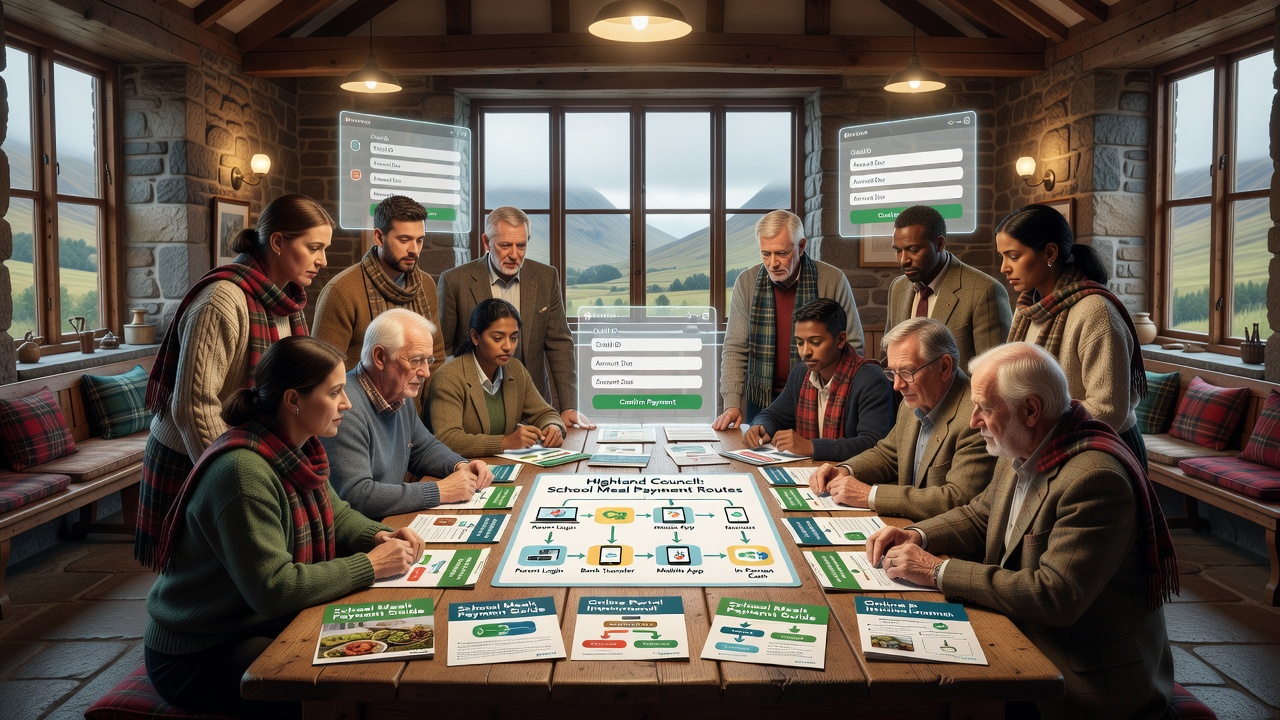
Parents in the Highland Council area now have two distinct digital pathways for settling school meal costs, depending on an identifier issued by their child's school. The distinction matters because it determines not just how a payment is made, but how much visibility a parent has over their child's account afterwards.
Two Identifiers, Two Systems
The council's approach hinges on which reference number a school has assigned. Schools that issue a Unique Reference Number (URN) - a code combining uppercase and lowercase letters with numbers - direct parents to pay through iPayimpact. Where no URN exists, payment instead relies on the child's Scottish Candidate Number (SCN), a nine-digit code used more widely across Scotland's education system for identification purposes.
This is not a case of parents choosing a preferred method. The correct channel is dictated entirely by what the school provides, which means the starting point for any parent is confirming which identifier applies to their child before attempting to pay online.
Why the Functionality Differs
The practical consequence of this split system is uneven access to account information. iPayimpact, used with a URN, gives parents a account statement, a payment history and clarity on when future payments fall due. That is a meaningful feature for households managing multiple children or trying to budget for recurring costs.
Payments made using an SCN do not come with the same transparency. There is no equivalent online balance view, meaning parents using this route must rely on other means - including direct contact with the school - to track spending or confirm a payment has registered correctly. For families, this asymmetry is worth understanding upfront, since it shapes expectations about how much oversight they will have once a payment is submitted.
Beyond Digital Payments
Online payment is not the only option. Parents who have received an invoice for outstanding meal charges can settle it digitally, but cash and cheque payments remain available through the school itself, with cheques made payable to The Highland Council. This dual-track approach - part digital, part traditional - reflects a broader pattern across UK public services, where councils retain offline options to avoid excluding families without easy digital access or banking facilities.
Secondary pupils have an additional mechanism: a revaluation unit based in school, which allows them to top up their own meal account with cash and check the balance directly, without needing a parent to log into any online system.
Where to Go for Problems
Linking a child's account correctly, resolving failed payments, or requesting a refund are common friction points in any system that splits identifiers across two platforms. The council directs parents with these issues, or any other query about school meal payments, to Catering Services directly. Given that the online experience differs so sharply depending on which identifier a family holds, having a clear human point of contact remains an important safeguard against confusion or payment errors going unresolved.