
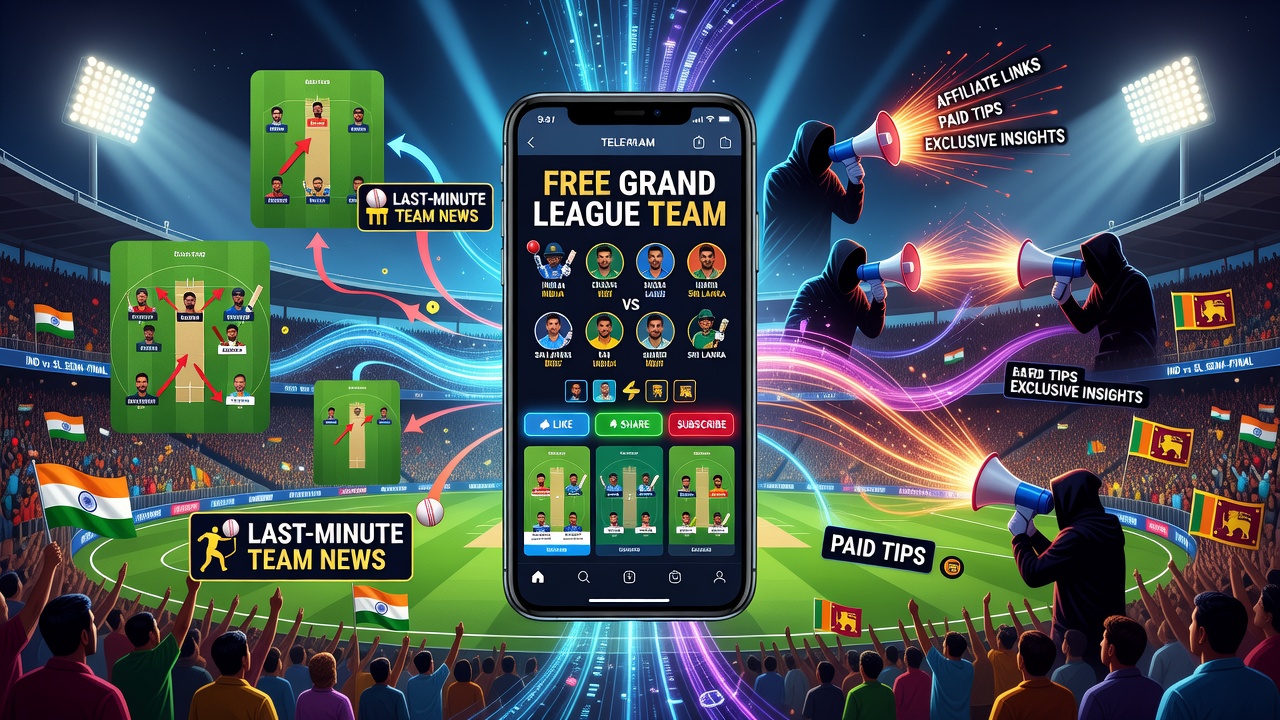
A short promotional clip circulating ahead of an India-Sri Lanka semi-final shows a familiar pattern in India's fantasy sports economy: a content creator offering a "free" grand league team through a Telegram channel, in exchange for likes, shares, and subscriptions. The clip is unremarkable on its own, but it is a useful window into how fantasy sports platforms, influencers, and messaging apps have become tightly interwoven in the run-up to marquee cricket fixtures.
How the fantasy-tipster economy actually works
Fantasy sports advice channels have multiplied alongside the growth of platforms that let users assemble virtual teams of real players and earn points based on on-field performance. Because outcomes hinge on statistics, matchups, and last-minute team news, a cottage industry of self-styled experts has emerged, promising curated lineups for high-profile matches. Telegram is the preferred distribution channel for many of these creators because it allows direct, algorithm-free access to subscribers, unlike mainstream social platforms that increasingly restrict gambling-adjacent promotion.
The business model is straightforward: free content builds an audience, and that audience becomes the asset. Engagement metrics - likes, shares, channel joins - are not incidental requests; they are the currency that lets creators later monetize through paid tips, affiliate links, or sponsorships from fantasy platforms themselves.
Why "free" advice still carries risk
Fantasy sports occupies a regulatory grey zone in India, treated by some courts and states as a game of skill rather than gambling, while others have moved to restrict or ban real-money formats outright. This patchwork means oversight of the advice ecosystem around these platforms is thin. Creators offering team suggestions are not bound by the same disclosure or fair-play standards that licensed gambling operators face in more mature regulatory markets.
- Performance-based predictions carry no guarantee; player form, pitch conditions, and last-minute exclusions can invalidate even well-reasoned picks.
- Channels built on free tips often pivot to paid subscriptions or embedded referral links once an audience is established.
- Users joining third-party channels share engagement data and sometimes personal contact details with unregulated intermediaries.
The broader consumer-protection question
What looks like casual cricket content sits at the intersection of influencer marketing, digital entertainment, and real-money gaming - three sectors India's regulators are each trying to govern separately, with limited coordination between them. Advertising standards bodies have issued guidance requiring responsible-gambling disclaimers on fantasy sports promotions, but enforcement on messaging apps and short-form video remains inconsistent. For users, the practical takeaway is simple: team suggestions from unverified sources are entertainment content, not expertise, and any real-money fantasy participation should be treated as a form of gambling with inherent financial risk, not a skill that can be outsourced to a stranger on Telegram.